Vogel, Stone, and Graham Talk Childhood's End, Premiering 12/14
 Childhood’s End, an adaptation of Arthur C. Clarke’s novel of the same name, premieres over three consecutive nights on Syfy, starting December 14th. The miniseries follows what happens when aliens take over earth to bring peace, health, and security. But is there a price to pay?
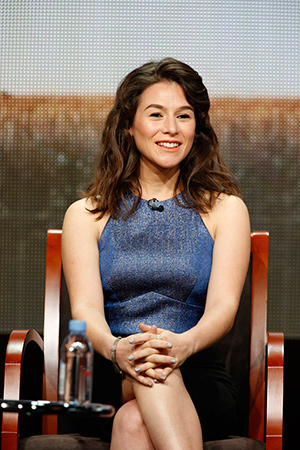
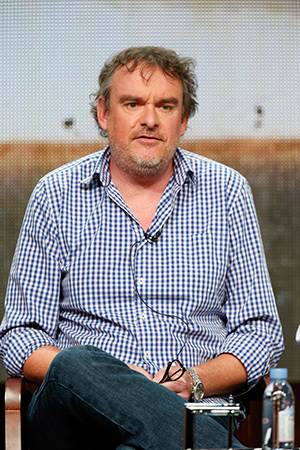
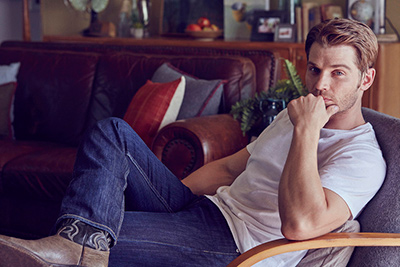
Recently, stars Mike Vogel and Yael Stone, along with executive producer Matthew Graham, talked to the media about the new show.
The group talked to SciFi Vision about reading and researching the original novel.
Vogel read the book after getting the role. “Initially, I did not realize the full weight of the project that I was committing to until I was on an airplane headed to Australia. Just because everything happened quite quickly, and as I started, you know, researching the book, and researching the history and the sort of the position that Childhood’s End held in the eyes and the viewpoint, to think of the fan base, I went, “Oh man, wow, this is a big commitment.”
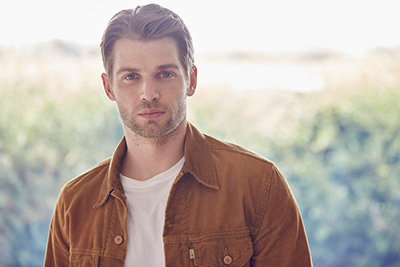 “But, yes, I read the book while we were filming. And, you know, that will speak to it. But I think Matt has done a fantastic job of maintaining the integrity and a lot of the characters and a lot of, you know, the main ideas of the book. There’s some parts of it have been altered a bit; my character in the book is a 60-year-old head of the UN and from Finland.
 “So we worked with a 35-year-old Missouri farmer; it’s a logical leap. But I think it made him, made Ricky, more relatable, more trustworthy as the everyman rather than the politician. But, yes, that was my experience with the book heading into this.”
Stone did as well. “I was familiar Arthur C. Clarke kind of in a periphery way as the guy who kind of predicted the internet, and the use of personal computers, and as a visionary and a kind of futurist. I hadn’t read the book, and then when the project came up, I then read the book. And, you know, I think [there is] a lot of fascinating big, big questions.
“But obviously the book being written when it was, kind of comes through from this very, you know, it’s a 1950s framework; it’s very sort of hetero-normative viewpoint. And I think Matthew has done a great job in just re-imagining the story and this incredible novel, while also kind of paying homage through a truth, but also modernizing it.”
Graham had first read the book as a teenager. “It was a book I read when I was 14, and it kind of stuck with me, mostly because as a 14-year-old, to be told some aliens won’t show themselves, because we can’t handle it, was just frankly the coolest thing you’ve ever read in your life. And you couldn’t wait to get through the pages to the point where they would reveal themselves, because you couldn’t imagine what it would be, that it would be awful, so challenging.
“So that was the kind of the initial thing and then of course the fact that the story plays out the way it does. It’s haunting too, especially to kids who’re used to kind of reading stories where things are kind of spoon fed emotionally to you in the way that makes you feel comfortable. So it kind of was with me for on and off through most of my life; it was a book that I remembered always fondly and was always excited by.
“So honestly I’ll just touch upon, you know, yes, we’ve done something to update it in some ways and make it more accessible to a broad audience, which I think is essential if you’re writing about the future not knowing what’s going to happen to us. You can’t set it in the 50’s, because we all live in the 21st century, and we know that those people in the 50s in a point have been worrying about the nuclear war and [it’s not] going to happen, at least for a while.
“So we have to be updated in order to keep a sense of paranoia and uncertainty that purveys the book. And then, you know, Mike touched on making Ricky a farmer rather than a politician. I think again that reflects the age we’re in now where we’re a little bit less – we’re more distrustful of politicians, and we’re certainly more aware of the cynicism that purveyed, and the problems that purveyed, global politics. So, you know, I adopted a more kind of old testament approach really, you know, it’s a kind of God speaking to the farm boy rather than God – making him a king, rather than God speaking to the king.”
The three also talked about the most challenging part of filming for them.
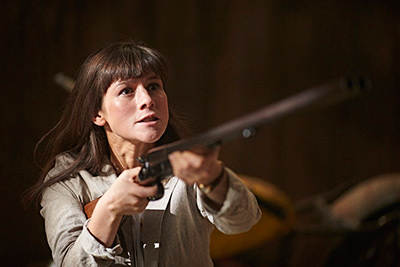 For Stone, it was working with green screen. “I never worked with imaginary things in front of me; I have to say that was a first time for me. And on my first day of set I was looking at a piece of green gaff tape and imagining the arrival of a being that represented everything that my whole life was set against, and perhaps the thing responsible for the loss of my mother.
 “And I’ve got to say it was pretty tough to be working of that green piece of gaff tape. And I think I wrote on my script, the date, and I wrote, “This is the day I have to stop acting, because I can’t do it, and it’s impossible.” I didn’t tell anyone, but that’s how I felt.”
Vogel agreed, though liked the results. “I would second Yael’s issues there, with acting to a lot of things that weren’t there. It was an incredible surprise once I saw the effects laid in, saw the ships laid in. But literally, all we had was a black rectangular box that we’d be stepping in and out of, and we step in the pod that would take us to the ship.
“And so, you know, maybe not rewarding in the moment and difficult in the moment, but the payoff was pretty fantastic. I was blown away when I saw what they were able to kind of craft around these – the black box that I stepped into and out of, and seeing how it all seamlessly fit together kind of blew my mind a bit.”
For Graham it was the sheer scope of the work. “I think probably the most difficult aspect of all it all for me was every single morning seeing what we have to shoot and do in a day. And it never seemed to get smaller; I kept thinking one day we’re going to look at a call sheet, and it’s going to say, “Mike sits under a tree and eats an apple with the tune” and it never did. It just said 5,000 extras, 100 utopian giant spaceships, huge aliens.
“And I mean, it was such a daunting, you know, it’s always a good idea I think to never fully know the scale of something, if it’s a big project, to never fully understand the scale of it going in, because you just wouldn’t do it. And once we got going, you know, as exciting as it was, it was just everyday was so daunting, just so much to do, and the scale and the ambition of it all.”
Syfy Conference Call
Childhood’s End
Stars Mike Vogel and Yael Stone and Writer/Executive Producer Matthew Graham
December 1, 2015
1:00 p.m. ET
SCIFI VISION: Hi, guys, thanks so much for doing the call today.
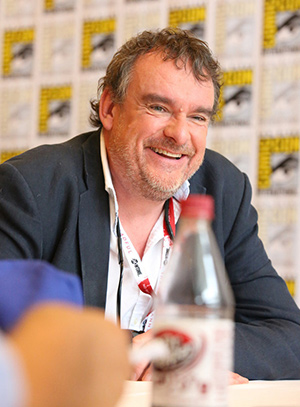 MATTHEW GRAHAM: You’re welcome.
 SCIFI VISION: I just finished part three last night and I really, really enjoyed the mini series. But I’m curious, I know it was based on a book and now I kind of want to go read it. How familiar were each of you with the book when you first started working on the project and have you read it since?
MIKE VOGEL: Initially, I did not realize the full weight of the project that I was committing to until I was on an airplane headed to Australia. Just because everything happened quite quickly, and as I started, you know, researching the book, and researching the history and the sort of the position that Childhood’s End held in the eyes and the viewpoint, to think of the fan base, I went, “Oh man, wow, this is a big commitment.”
But, yes, I read the book while we were filming. And, you know, that will speak to it. But I think Matt has done a fantastic job of maintaining the integrity and a lot of the characters and a lot of, you know, the main ideas of the book. There’s some parts of it have been altered a bit; my character in the book is a 60-year-old head of the UN and from Finland.
So we worked with a 35-year-old Missouri farmer; it’s a logical leap. But I think it made him, made Ricky, more relatable, more trustworthy as the everyman rather than the politician. But, yes, that was my experience with the book heading into this.
SCIFI VISION: That’s great.
YAEL STONE: Hi, this Yael. I was familiar Arthur C. Clarke kind of in a periphery way as the guy who kind of predicted the internet, and the use of personal computers, and as a visionary and a kind of futurist. I hadn’t read the book, and then when the project came up, I then read the book. And, you know, I think it’s a really – a lot of fascinating big, big questions.
But obviously the book being written when it was, kind of comes through from this very, you know, it’s a 1950s framework; it’s very sort of hetero-normative viewpoint. And I think Matthew has done a great job in just re-imagining the story and this incredible novel, while also kind of paying homage through a truth, but also modernizing it.
MATTHEW GRAHAM: Thank you Mike and Yael for saying that.
I mean, it was a book I read when I was 14, and it kind of stuck with me, mostly because as a 14-year-old, to be told some aliens won’t show themselves, because we can’t handle it, was just frankly the coolest thing you’ve ever read in your life. And you couldn’t wait to get through the pages to the point where they would reveal themselves, because you couldn’t imagine what it would be, that it would be awful, so challenging.
So that was the kind of the initial thing and then of course the fact that the story plays out the way it does. It’s haunting too, especially to kids who’re used to kind of reading stories where things are kind of spoon fed emotionally to you in the way that makes you feel comfortable. So it kind of was with me for on and off through most of my life; it was a book that I remembered always fondly and was always excited by.
So honestly I’ll just touch upon, you know, yes, we’ve done something to update it in some ways and make it more accessible to a broad audience, which I think is essential if you’re writing about the future not knowing what’s going to happen to us. You can’t set it in the 50’s, because we all live in the 21st century, and we know that those people in the 50s in a point have been worrying about the nuclear war and [it’s not] going to happen, at least for a while.
So we have to be updated in order to keep a sense of paranoia and uncertainty that purveys the book. And then, you know, Mike touched on making Ricky a farmer rather than a politician. I think again that reflects the age we’re in now where we’re a little bit less – we’re more distrustful of politicians, and we’re certainly more aware of the cynicism that purveyed, and the problems that purveyed, global politics. So, you know, I adopted a more kind of old testament approach really, you know, it’s a kind of God speaking to the farm boy rather than God – making him a king, rather than God speaking to the king.
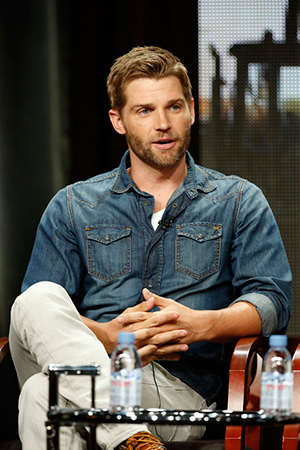 QUESTION: This book was in 1953 and it’s already been said somewhat sort of references the original book, references those times, but now we’ve updated it to 2015. What do you think it is that makes this a good time to tell the story?
MATTHEW GRAHAM: I mean, I don’t think anything has changed. I mean, in 1950 we were coming out of a very brutal war and a very expensive one. No change there.
We were entering an age of austerity in the 1950s, no change there. We were terrified by the cold war. No changes there that seems, that potentially is rearing up again. And substitute any fear that they had in 1952 to the fears that we have now coming out of the Middle East. And you got the same paranoia in your (OCs), and terrorists that they were facing. So the relevance I think is not changed one iota, and then what the others think.
MIKE VOGEL: Yes, I think that’s the scary thing is that sort of fast forward 60 years and we’re kind of still in the same place, which is I think is all the more reason why the story needs to be told. You know, the whole reason that these aliens come down to earth, you know, to say, “You guys have had your shot, you screwed it up, that’s enough of that right there. It’s time to fix some things.” And that we’re still having these conversations this far down the road, and that you can almost insert the same players into the story, the same international and global players in the story, then as now, shows that for all the advancements that we had for in technology and medicine and everything else as it comes to people, as it comes to us dealing with each other, sadly not much has changed.
And so as Matt would say, and as the history of this book, it has been many people have tried to undertake the huge task of somehow taking this book and putting it into film or television. But, you know, I think I’m glad that it’s going to happen today, because the ability that we have to reach such a global audience with a project to deal with some issues amongst humanity, which are global issues. So I think now is a great time to tell the story, and I’m glad we’re able to be a part of doing that.
QUESTION: Yael, what was it like for you filming home in Australia.
YAEL STONE: It was wonderful. Yes, it was really fantastic; obviously I wasn’t filming in an Australia accent so still doing some verbal gymnastic there. But it is wonderful to be working in Australia, and I think, you know, the Australian crew members that we work with were just always incredibly professional and incredibly talented, so that was great to feel proud of the Australian industry that’s so strong and full of wonderfully talented people.
And there were also a lot of Australian actors, a lot of familiar faces I saw recently when I watched night one and two; I haven’t quite seen three yet. But that’s also a wonderful thing. And I’m about to head home again for another three months, and I’m really excited to do that. It’s a great place to work.
QUESTION: Mike, you got some really heavy emotional scenes in Childhood’s End, those meetings with Karellen, where we can’t see him, was that tough to shoot? I mean, was Charles Dance around or was this all kind of using your imagination?
MIKE VOGEL: Yes, you know, it’s interesting, because when I read that script and was preparing for it, you don’t – when you’re reading it on the page, you’re seeing two characters interacting. But it didn’t really dawn on me until I got there and was talking it over with Matt, and was talking it over with Nick Hurran, about how we were going to shoot it.
It was then brought to my attention, you realize that you’re by yourself here standing in front of a mirror that there’s no one physically there that you’re acting against. And, you know, there was just this instant feeling of vulnerability and nakedness that, “Oh crap I have to somehow hold this thing.” Now don’t get me wrong, the voice of Charles Dance demands – the man yawns and everyone snaps to attention.
 You know, that was that was a great help. We had him – Charles was actually off stage, and we piped him through a loud speaker that was hidden on stage there with me. So I had his voice to, you know, to respond to. But it’s a lot of time kind of sitting there in front of a mirror, which was great, and as Matt pointed out, it’s sort of this thing with Ricky, where part of the reason they choose Ricky is because he’s not a guy that’s too worried about appearances, and too worried, you know, his ego doesn’t play a huge part in who he is.
 But then all the sudden he’s kind of thrust into this world stage, thrust into this spotlight. And he’s having that moment of, you know, a bit of that start to creep in, and he start to believe his own presence for a second, and kind of like the power and the position that he’s finding himself in, and here he is in front of a mirror basically playing to his vanity, almost the overlords that kind of playing to that vanity and constantly everywhere he looks is reminding him of this other world.
So I thought it was a really great touch but, yes, I mean, it was an interesting switch that I went through of when I finally realized that, oh man, it’s just me kind of out here by myself doing this whole thing. And it’s funny how your mind doesn’t connect that when you’re reading, because it just reads like a normal script, until you realize that wasn’t the case at all.
QUESTION: If aliens were to land tomorrow, and, you know, offer to solve all the world’s problems, but it will mean the end of science, the end of culture, would you take that deal?
MATTHEW GRAHAM: You just hit on the ballroom conversation we have almost every single night in Melbourne. It’s a really tough one, because there’s a bit of me that kind of sides with Colm Meaney’s character, Wainwright. And that in some ways you kind of want to be just in charge of your own destiny for good or for bad. We don’t want to be condescended; we don’t want to be mothered; we want to do it ourselves.
But right now with everything that I’m moving down the gun barrel off, whether it’s ISIS, whether it’s the fact that we’re going to run out of antibiotics, and we’re going back to medieval science - medieval medicine in the next generation. I think I would take the gamble; I think I’ll have the overlords.
YAEL STONE: I got to say I agree with you.
I feel like it would be deeply egotistical to say, “No, no, our culture is much more important than people’s lives in the state of our environment.” I guess, I look around and I think, “You know what, we haven’t been doing such a crash hot job so far.” So I’m interested to see what the aliens would do.
MIKE VOGEL: And, you know, Daisy had an interesting saying that I’ve heard [her] say, she said, “You know, we should strive for utopia but, you know, maybe never achieved it. And, you know, I fall on the other side, and maybe that six sadistic side of me, but I just think that – I mean if we look at the story, yes, the aliens come down and solve the problems, but it comes at a price, doesn’t it?
It’s not for free; there’s a time where everything works out, but there’s still a price tag attached to it and a pretty hefty one. Where as I look at it and say, “Yes, we screwed a lot of things, but I still have a strong belief in the ability and the decency of humanity, as ugly as we can get, and we can get pretty sick and ugly, that in the end decent people, people of courage, will rise up and will stand for what’s right.”
And what comes out of that will be something beautiful, and there will be, you know, it leads to great culture, great art, all of those things I think come from that. So I maybe alone on an island on the other side of it, but that’s where I side.
SCIFI VISION: So I’m just curious if you could all talk about maybe what your most challenging part of filming was?
YAEL STONE: I never worked with imaginary things in front of me; I have to say that was a first time for me. And on my first day of set I was looking at a piece of green gaff tape and imagining the arrival of a being that represented everything that my whole life was set against, and perhaps the thing responsible for the loss of my mother.
 And I’ve got to say it was pretty tough to be working of that green piece of gaff tape. And I think I wrote on my script, the date, and I wrote, “This is the day I have to stop acting, because I can’t do it, and it’s impossible.” I didn’t tell anyone, but that’s how I felt.
 MATTHEW GRAHAM: Mike, you got...
MIKE VOGEL: Quickly, I think it would probably – I would second Yael’s issues there, with acting to a lot of things that weren’t there. It was an incredible surprise once I saw the effects laid in, saw the ships laid in. But literally, all we had was a black rectangular box that we’d be stepping in and out of, and we step in the pod that would take us to the ship.
And so, you know, maybe not rewarding in the moment and difficult in the moment, but the payoff was pretty fantastic. I was blown away when I saw what they were able to kind of craft around these – the black box that I stepped into and out of, and seeing how it all seamlessly fit together kind of blew my mind a bit.
MATTHEW GRAHAM: I think probably the most difficult aspect of all it all for me was every single morning seeing what we have to shoot and do in a day. And it never seemed to get smaller; I kept thinking one day we’re going to look at a call sheet, and it’s going to say, “Mike sits under a tree and eats an apple with the tune” and it never did. It just said 5,000 extras, 100 utopian giant spaceships, huge aliens.
And I mean, it was such a daunting, you know, it’s always a good idea I think to never fully know the scale of something, if it’s a big project, to never fully understand the scale of it going in, because you just wouldn’t do it. And once we got going, you know, as exciting as it was, it was just everyday was so daunting, just so much to do, and the scale and the ambition of it all. So, yes, that was probably it.
YAEL STONE: And you didn’t like the insects very much, did you Matt?
MATTHEW GRAHAM: No, I don’t. Everything seems to want to kill you in Australia. Even the little plants, the little lovely flower that you’re supposed to touch, or there’s a nice bush and someone says, “Oh, there’s probably a snake in there that eats babies.”
MIKE VOGEL: Don’t go in the water; the jelly fish will kill you.
YAEL STONE: I like when people talk about these kinds of rumors, because it makes me feel really tough.
MIKE VOGEL: Yes, right, right.
QUESTION: Matthew, how did you become involved in this project in the first place.
MATTHEW GRAHAM: I basically went from meet and greet with ozone of the producers Mike De Luca, and he brought the book up from behind his desk and said, “Do you know this book?” And I said, “Yes, I love the book; I read it as a teenager.” And he said, “Well, Syfy has asked me to bring it to TV as a mini series, do you want to do it?” And I said, “Yes,” and it really just sprang from that. I mean, I have to jump through a few hoops for Syfy and for the studio, (ECP) and talk to them at length about my take on it, but that’s kind of how I got involved.
QUESTION: Adapting a novel to the screen is always a challenging process; playing characters who first appear on the page on the screen is always a challenging process. What do you – and certainly anybody could answer, but it’s definitely Matthew. How were those order challenges for you?
MATTHEW GRAHAM: Well, the challenges were enormous, but you do have to kind of put that to one side, and you have to be like daunted. The book exists as a book and it’s often – and it’s nothing I ever do will change the brilliants of Arthur C. Clarke wrote. I just have to think all the way of adopting it and making it relevant today and be honest with myself if there are things in the book that I don’t think I’m going to play well on TV.
And as long as you just keep on telling yourself it’s not going to work, and you change that, then that that’s your kind of roadmap. But it is a huge challenge; it’s not as big of challenge, I don’t think it is a big of a challenge as I don’t know, [War and Peace], or even, you know, something like the English Patient which is a very elliptical book which turned to a very mainstream format.
 So in the structure of the Childhood’s End, it’s very clear, and it’s just more about getting in the philosophy and the other ideas behind it and making sure that you get the right thing in at the right time, and you don’t overload it. Because the worst thing is when you suddenly feel that you’re brief - you got to find a way to figure it out without it turning into a PowerPoint presentation.
YAEL STONE: I guess, I was sort of fortunate that I didn’t have the pressure of this character that it appears the first in the book. Peretta is a wonderful invention of Matthew that springs very interesting and critical questions about religion that happens in the middle part of the book, as the book is kind of structured in three sections. So I’ll skip to that pressure. But I was delighted that Matthew did create the character.
I think, number one, it’s great to have a woman in the story driving her own story, which is fantastic, and I’m very happy to be that person. And, you know, in terms of looking at this character who’s so deeply motivated solely by kind of emotional history and also religious text, I think that’s fascinating in our current climate and has always been a fascinating question where humans are concerned, where we gripped to face where we use it as justification for certain things. I think, you know, that character is crucial and really interesting in this exploration of the story.
QUESTION: It seems that there’s a lot of effects in this mini series as mentioned with the spaceship and then as Yael just talked about with the green tape. I know production also uses a lot of practical effects, how did that help pull you into this setting [and] into your character?
MIKE VOGEL: For me it was shocking, I think, dealing with Charles. I know Charles had a monumental task in that suit acting and kind of pulling that off in all of that makeup and garb. But for us as the actors, I mean, I didn’t want to see his suit or see, you know, even the concept of what they wanted to look like until we actually did the first – I think the first scene that he and I did together was in the hotel room which was essentially the last scene of the movie, is the one that we did first, at least one of the last scenes for me with Charles.
And I was shocked to turn around and to see this guys looking like he looked. That they made that choice to do that practically rather than adding all of this stuff and post and I would say 95 percent of what was there was what you saw in person. And I was grateful for that.
YAEL STONE: Absolutely. I completely agree. The difference between working with the piece of tape and working with Charles and also his amazing stunt double, Holly, I believe his name is.
It was incredible, because we had both this incredible appearance, which I can’t describe, obviously, but also have the size of the alien as well by using the stunt double we were able to actually relate to the creature in terms of our eye line, and our physical relationship to this being which was just as enormous, that 7 foot imposing terrifying creature.
 QUESTION: It’s mentioned in the Syfy synopsis for this that the original book of Childhood’s End has inspired a lot of alien invasion TV shows in movies like the Falling Skies, perhaps, and Independence Day, and so on. So what would you say to audience coming to this might see this as perhaps just another alien invasion story, what would you tell them the qualities that make this one different from ones they’ve seen before?
 MATTHEW GRAHAM: I think the big thing is that it’s not about fighting them, it’s about – it’s a conversation between humanity and the superior intelligence that may or may not be here to hurt us, we don’t know, they don’t know, no one knows for sure. But all the science point to them being benevolent but omnificent.
And so I think it’s the game we’re playing with the audience is hopefully a relatively subtle game, it’s not “Oh, they’re here to help us. But, oh, look behind closed doors they’re cackling and rubbing their claws together and they clearly got a scary plan.” It’s more about how we perceive them.
They don’t change; they stay pretty true to themselves, and that they are here to help us. Obviously towards the end of the story does the end game become apparent. But it’s about how they look about challenges from the characters, and obviously Yael’s characters and other characters are profoundly affected by questions raised in their minds about them.
So I think that’s what we’re trying to hang on to the philosophical aspect of real science fiction as suppose to laser guns and – it’s not a wham-bam action type piece, it is trying to (sub honor) it’s literally roots. And I think that’s what makes it different.
And also I like about that the three nights are different. I would depict as, you know, the first night is The Day the Earth Stood Still, the second night is more kind of a, you know, just kind of spoiler relevant, so you have to decide here. But, you know, first night is The Day the Earth Stood Still, second night is kind of more of a Rosemary’s Baby, and the third night is more like Titanic.
And there are three different movies with three different vibes, and I think that’s something that doesn’t normally happen in television. So I think these things make it very fresh, but leaving the spoiler aspects aside and advancing them on watching. I would say this is a relatively smart alien invasion movie, and it’s about a dialog between human and aliens rather than they’re trying to take our bodies over and grow it in pods or something, you know? And that what is so different about it.

Latest Articles
Interviews
 Murderbot: Hazel Baird and Rob Cawdery of Elastic on Creating the Emmy-Nominated Main Titles
 Monday, 24 August 2026
 Monarch: Legacy of Monsters - VFX Supervisor Sean Konrad on Designing Titans, Emmy-Nomination & More
 Sunday, 23 August 2026
 Son of Sara: Tymika Tafari on Carol's Devotion, Fight Scenes & Volume Two Hopes
 Tuesday, 11 August 2026
 The Walking Dead: Dead City's Logan Kim on Hershel Finding Confidence, Connection, and a New Purpose
 Monday, 10 August 2026
 Son of Sara: Garrett Hnatiuk on Camp, Collaboration, and Classic Horror Influences
 Saturday, 08 August 2026

 Spider-Noir: Hnedel Maximore Breaks Down the Emmy-Nominated Visual Effects
 Wednesday, 05 August 2026
 Foundation: Chris MacLean on Building the Show's Epic VFX, The Emotional Season Finale & More
 Tuesday, 04 August 2026


Reviews


